Where Community and River Meet
Before it became a tradition, before the stages and silk screens and summer crowds, there was a simple idea: bring people together in celebration of the Eno River—and in doing so, inspire them to protect it.
For more than 45 years, that idea has taken shape as the Festival for the Eno. As the Eno River Association (ERA) celebrates its 60th anniversary, the Festival stands as one of its most visible and enduring expressions of community, culture, and conservation.
Each year since 1980, thousands have gathered along the riverbanks to sing, dance, create, and connect—drawn together by a shared love for the Eno and a shared commitment to protecting it.
The Spark: A Festival Comes to Durham
The Festival’s story begins before 1980, with a spark of inspiration from the North Carolina Folklife Festival—an offshoot of the Smithsonian Folklife Festival, which began in Washington, D.C. in 1967. Designed to celebrate cultures from around the world, the festival traveled to cities across the country, arriving in Durham in 1976.
Held at the newly opened West Point on the Eno City Park during the nation’s bicentennial, the festival brought traditional crafts, music, dance, and trade demonstrations to the banks of the river. It was a powerful example of what could happen when culture, place, and community came together.
Learn more about the Folklife Festival as the Durham Museum of History commemorates its 50th Anniversary this year: https://www.festival76nc.org/#home.
A Vision Takes Root
Inspired by that moment, Margaret Nygard and other ERA members saw an opportunity: what if Durham had its own annual festival—one that not only celebrated culture, but also supported the protection of the illustrious Eno?
In 1980, that vision became reality. The goals were clear and ambitious: raise awareness of the ERA’s work with the public, demonstrate community support to decision-makers and politicians, share the importance of land conservation, and generate funds to protect more of the Eno River basin.
Just as important was the spirit behind it—rooted in volunteerism, creativity, and a deep sense of community ownership that continues to define the Festival today.
The First Gathering
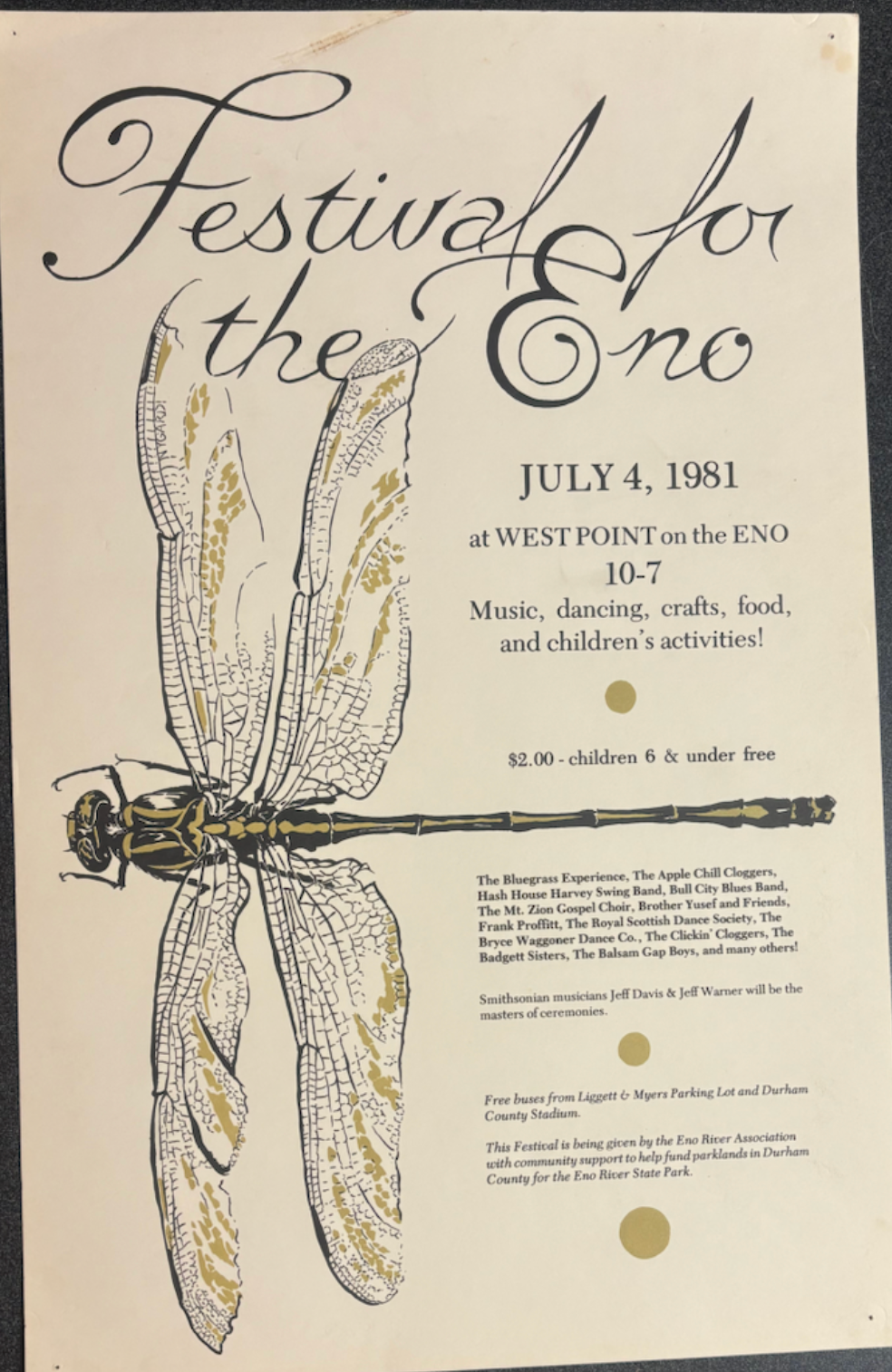
The first Festival for the Eno took place over Independence Day weekend in 1980, organized by Nygard and around 100 volunteers. What began with two stages, art displays, craft booths, and food vendors quickly became something much larger, drawing nearly 12,000 attendees in its first year.
From the beginning, the Festival invited participation. Visitors didn’t just watch—they learned, created, and experienced traditions firsthand through activities like weaving, woodturning, chair caning, instrument making, and more.
In the years that followed, the Festival grew into one of the premier folk and arts festivals in North Carolina and the Southeast—while staying true to its roots in community and conservation.
Art That Tells the River’s Story
One of the Festival’s most beloved traditions is the Big Top, where each year the ERA unveils its annual merchandise and signature silk screen print. These prints—featuring a different species from the Eno River basin each year, beginning with the great blue heron—celebrate the biodiversity of the region and the landscapes the ERA works to protect.
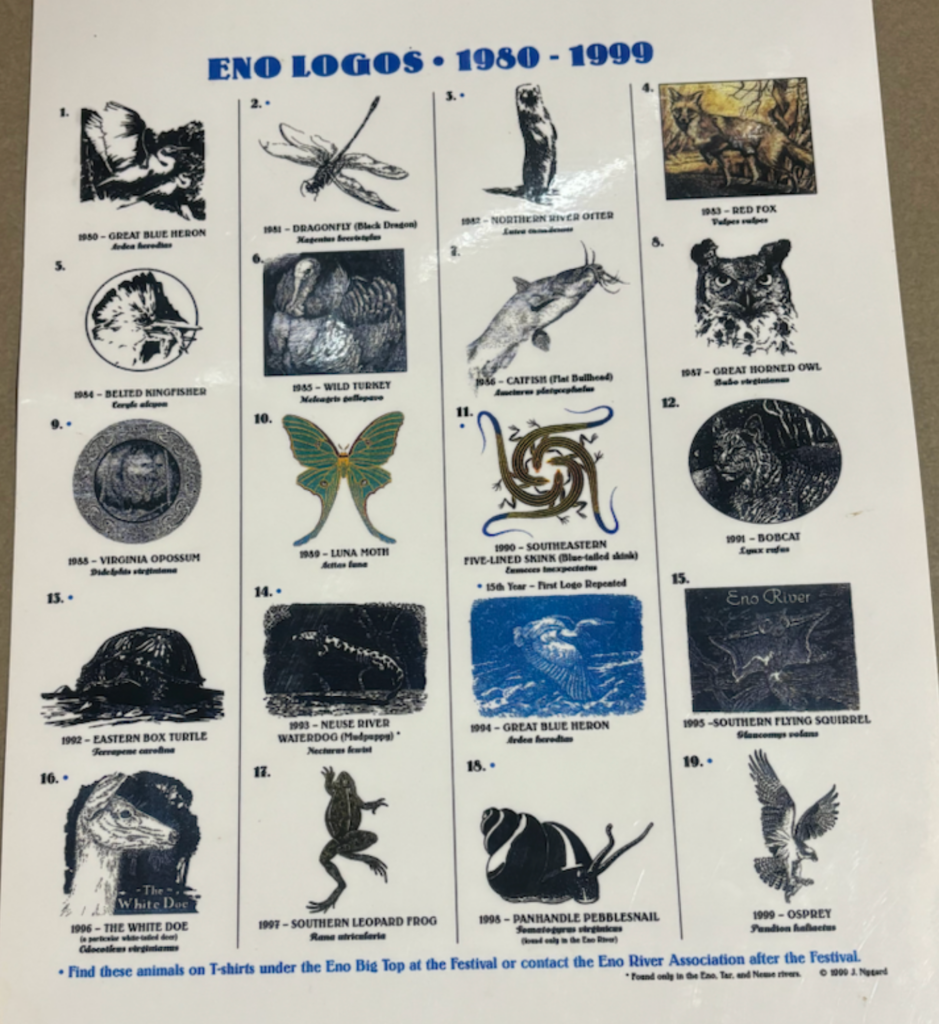
The Festival’s visual identity has also been shaped by the many artists who have contributed logos, posters, silk screens, and other artwork throughout the years. The work of Jennifer Nygard, Joe Liles, and countless other community artists with a passion for the Eno River has helped create vivid representations of the river’s beauty, wildlife, and spirit.
More than just artwork, these pieces tell a story of connection between people and place. For generations of Festival attendees, they have become lasting symbols of community, creativity, and conservation—and a meaningful way to support the protection of the Eno River year after year.
The Soundtrack of the Eno
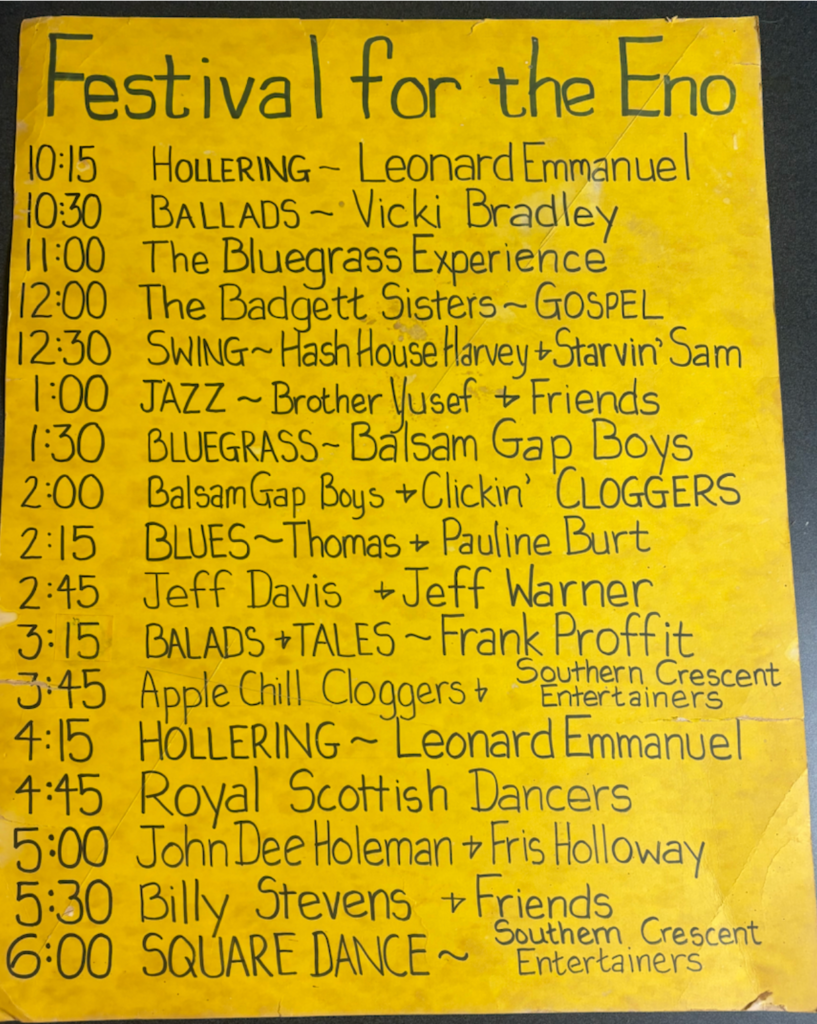
Music has always been at the heart of the Festival. Early lineups featured local artists from Durham, Raleigh, and Carrboro, and grew to include nationally recognized performers who helped draw in larger crowds.
Artists like Doc Watson, Emmylou Harris, Elizabeth “Libba” Cotten, and Etta Baker brought wide recognition, while local favorites like Lightnin’ Wells and the Cane Creek Cloggers became woven into the fabric of the Festival itself. These performers loved to share their pride in the Eno River and the festival itself, advocating for locals to connect with the land and celebrate its culture and history.
Over time, the ERA returned its focus to primarily local performers—creating space for emerging artists to thrive and reinforcing the Festival as a platform for community talent, while also adapting to the practical realities of hosting a large outdoor event where bigger names became increasingly costly to feature.
More Than a Festival Weekend
The Festival experience has always extended beyond the stage. Local community members welcomed musicians with home-cooked meals, iced tea, and a spirit of hospitality that made the event feel personal and grounded.
Food vendors added to the experience, offering everything from Southern staples to international cuisine—reflecting the diversity of the local restaurant and food truck community itself.
Throughout the weekend, popular individuals would serve as Masters of Ceremonies (MCs) to share updates about the ERA’s conservation work related to the Eno River basin’s biodiversity and land acquisitions, connecting celebration with purpose. Storytellers, parades (which began in 1982), and handmade costumes added to the Festival’s vibrant, participatory spirit.
Honoring Culture, Deepening Community
The Festival has also played an important role in uplifting Black artists and the diverse culture of the Eno River basin.
Chuck Davis, who started the African American Dance Ensemble in New York City, moved back to Durham for the American Dance Festival in 1980. He brought powerful expressions of dance, history, and cultural heritage to the Festival stage while teaching at the dance council and in underserved schools.
Through the diversity of activities and artists featured, the Festival has continued to grow as a space where culture is celebrated, stories are shared, and community is strengthened.
For many, the Festival is more than a single weekend—it is a tradition passed down through generations. Volunteers return year after year, offering their time, energy, and care. Attendees come back to reconnect with the river, with one another, and with a shared sense of purpose.
Carrying the Tradition Forward
For more than four decades, the Festival for the Eno has brought people together in celebration of music, art, and the natural world—while supporting the conservation work at the heart of the ERA’s mission. Rooted in volunteerism and creativity, it has long been a beloved summer tradition. And, as the ERA marks its 60th anniversary, that spirit of gathering remains as important as ever.
In recent years, however, rising temperatures and increasingly unpredictable weather—including Tropical Storm Chantal in 2025—have made hosting a large outdoor event in July more challenging. With more than 600 volunteers, many of them older adults, these conditions present growing health and safety concerns for a Summer event. The upcoming closure of West Point on the Eno for construction has also created an opportunity to thoughtfully reimagine the Festival’s format.
In this milestone year, the Eno River Association will host a special 60th Anniversary benefit concert in downtown Durham on September 12, 2026, in place of the traditional July Festival. While the setting and season may change, the heart of the Festival remains the same: bringing people together through music, community, and a shared commitment to the river. In recognition of Rosh Hashanah, the event will begin after sundown to ensure broader accessibility for those observing the holiday.
This transition reflects an evolution of the Festival for the Eno. With plans to reimagine and return to a Festival format in spring 2027, the ERA continues its commitment to carrying this tradition forward with community care and environmental stewardship at the forefront—ensuring that future generations can gather, celebrate, and protect the Eno River together.