February Director’s Message
Dear Friends of the Eno,
February marks the celebration of Black History Month and I wanted to focus my message this month on acknowledging the significance of Black history as it relates to the Eno River Valley and share more about how race continues to impact our work today.
My experience doing nonprofit work related to basic needs in Durham did not prepare me for what I have seen in my first year at ERA. What I have found is that environmental work seems far whiter than the community at large, and while I could spend a great deal of time hypothesizing about why that is, I think it’s more important to focus on what ERA and our partners could and should do to make people of color feel welcome in this space.
It’s clear to me that the status quo isn’t working, and that we need to be deliberate about how ERA can reflect the racial diversity of our community in our staff, in our Board, and in our programming, to make real progress on this issue. While discussions related to Diversity, Equity, Inclusion and Accessibility (DEIA) certainly seem to have become less common over the last year, the issue is very much on the front burner at ERA. Avoiding this issue is not going to change the dynamic, and I would politely suggest that opting out of uncomfortable conversations around race is, in my mind, a strong indicator of the presence of white privilege.
ERA has adopted a series of strategic goals in its current strategic plan related to action steps that we believe will help promote racial diversity across the Association. We are in the process of reviewing and updating those goals to ensure that they are appropriate, time-bound, and easily measurable. ERA’s DEIA Committee, ably led by Board member Delphine Sellars, has been busy over the last year – implementing recommendations from ERA’s racial equity audit, engaging with and responding to concerns from the BIPOC community, and planning next steps to move the work forward. It has been challenging work for all involved, but it feels to me like ERA is leaning into the discomfort associated with difficult conversations.
I have been deliberate about seeking opportunities for ERA’s staff to engage and learn more about this topic. Many of our staff members are relatively new to the organization, and are unfamiliar with the rich history of the Eno. Together we are reading “Ribbons of Color Along the Eno River” (Eno Journal Vol. 10, No.1) to learn more about the many ways that people of color have contributed to the history of this amazing place. I would be remiss not to thank Beverly Scarlett and the many contributors who made this journal (and its companion) a reality. I am so excited for our full team to begin this learning process together. If you’re curious about this topic, I invite you to join us and to read along at your own pace.
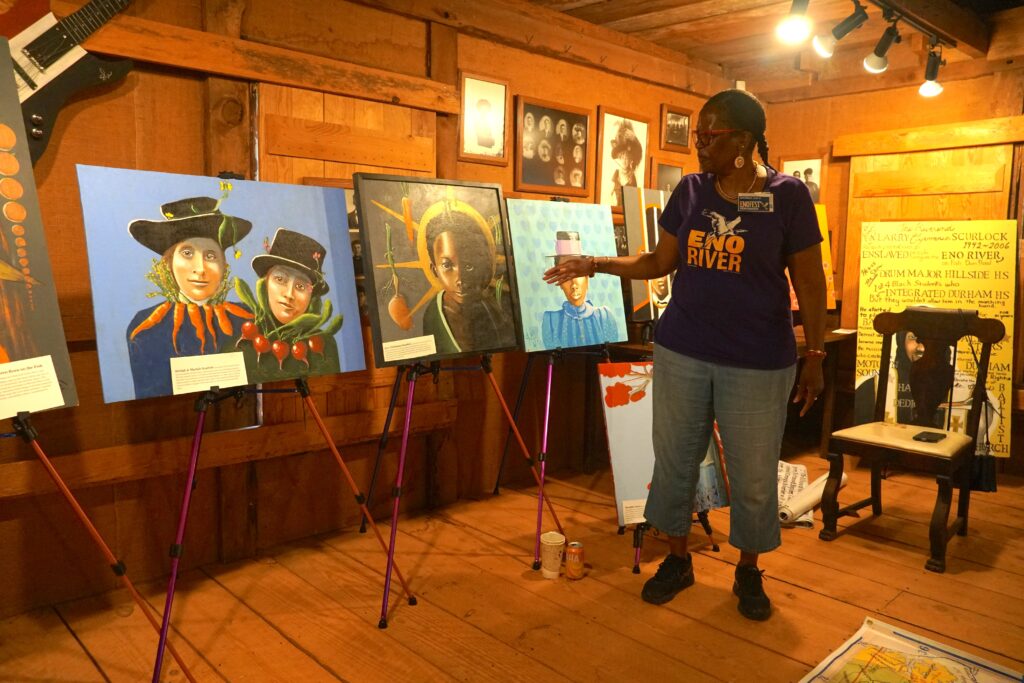
I want to be clear that ERA’s intent to reflect the diversity of our community does not mean that white people are unwelcome. I want this to be a movement that is welcoming to all. My hope is that you will join us in our goal of making the Eno for everyone by being an ambassador for ERA and the Eno with your friends, neighbors, and coworkers.
My goal is that, as ERA continues to be deliberate about diversity across the organization, people of color see and feel that this is a safe space. I have heard more than once that this has not always been the case, and I feel strongly that we need to work together to learn from the mistakes of the past and be better moving forward. This is how we build a movement. Thank you for all of the ways that you support ERA. Together, we can do hard things.
In Community,