The Eno River was named after an Indigenous tribe known as the Haynoke, Oenoke, or Enoe Indians. The Eno River Association, Eno River State Park, Panther Branch Natural Area, and West Point on the Eno are located on the traditional and ancestral homelands of the Eno, Shakori, Sissipahaw, Occaneechi, and other people of Siouan descent, as well as their descendants, the Occaneechi Band of the Saponi Nation.
Introduction
For 60 years, the Eno River Association has worked to protect the natural, historical, and cultural resources of the Eno River Basin. As the Eno River Association’s (ERA) work has continued into the 2020s, its mission has been strengthened through land conservation efforts, stewardship events, educational and outreach programs, and plans for what environmental work will look like in the future with the changing climate in North Carolina. To create a full picture of the Eno River Association’s work today, interviews with current staff were conducted to explore the important events of the early 2020s, recent changes to the Eno, and hopes for the future of land conservation and stewardship in the Eno River Basin.
Land Conservation and Stewardship
Throughout the 2020s, conservation and stewardship efforts have grown with key land acquisitions. Stewardship efforts have also expanded to restoration of the land the ERA has protected, including prescribed fire management projects, tree plantings, invasive species removals, and other ecological restoration.
Specifically, the recent addition to Blue Indigo Preserve has encapsulated a lot of Eno history. Over the years, the ERA has made an effort to engage with the neighborhood intentionally, take the community on hikes, and be stewards for the unique ecosystem at the Preserve. At Blue Indigo Preserve, stewardship focused on restoring the diabase savannah ecosystem found there, which is home to a variety of plant species not usually found in the Piedmont.
Another key project involved the acquisition and transfer of the Occoneechee Speedway to the Eno River State Park in 2025. This addition includes a trail on a dirt speedway from NASCAR’s 1949 season, and the James M. Johnston Nature Preserve. It also includes trails part of the Mountains-to-Sea State Trail. Totaling over 200 acres, this land transfer is one of the ERA’s biggest accomplishments and increased the total acreage of the State Park to over 4,700 acres.
In 2025, ERA began restoring 8.6 acres of native forest and nearly 20 acres of Piedmont prairie habitat at the Confluence Natural Area. Recreation goals were also pursued through completing the new Poplar Bend Loop and Cut-Through trails at the Confluence in 2024, as well as removing thousands of pounds of trash from old dump sites on the expanded portion of the preserve.
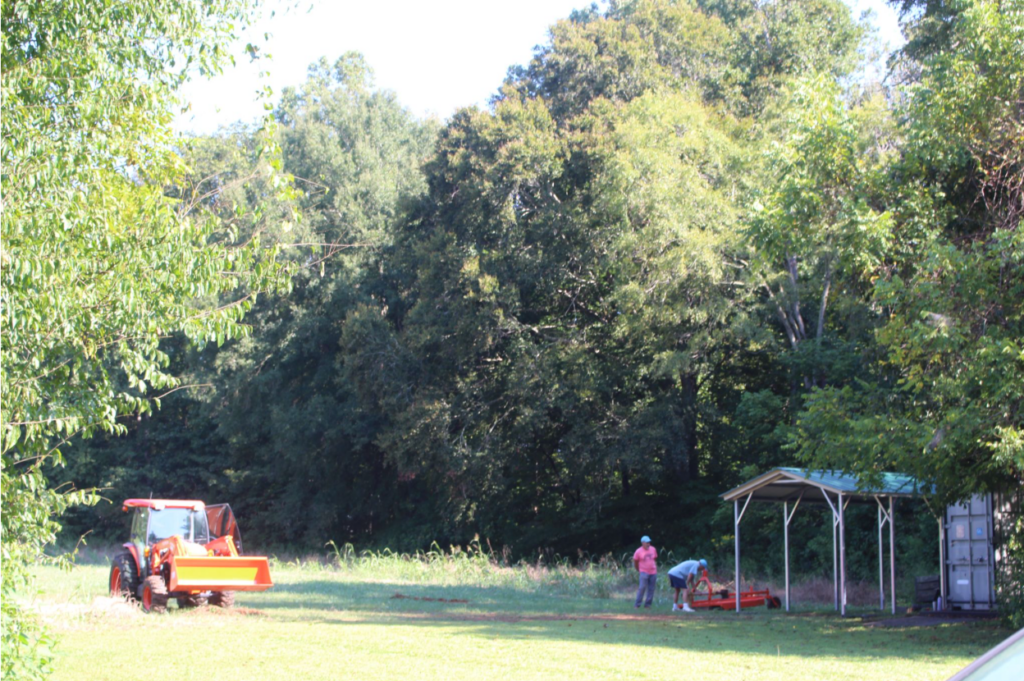
As Indigo Roper-Edwards, the Land Stewardship Manager at the ERA says, “This kind of major ecological restoration is not something that the Eno River Association had done before.” Doing active management on land conservation gives community members the opportunity to learn something new about the prairies, forests, and other ecosystems here.
The work that the ERA conducts would not be possible without a dedicated team of volunteers, including the individuals in the trail stewards program and other community members giving time and effort at workdays. As Indigo stated, “We have a really spectacular volunteer base, especially in land stewardship, that makes it possible to do the work that we do. Especially having [Trail Stewards to keep] the Confluence and Panther Branch maintained without it being a huge amount of work to our staff. The expansions that we have been able to make and the Stewardship that we do is a huge show of how this organization runs on volunteers. As far as the actual impact we have, it is orders of magnitude greater. We have a great number of volunteers that come to sites and trail building and make the work possible with their spare time and because they feel motivated to do it”
Much of the stewardship and conservation work done today has not been possible without the long-lasting connections that the ERA has fostered throughout its 60 years. Chris Dreps, the ERA’s Conservation and Stewardship Director started at the Eno last year after working as a conservation director at the Ellerbe Creek Watershed Association (ECWA). As an individual with a love for the Eno’s work to protect the land, tributaries, and wetlands around the Eno River, he stated that it has been “Amazing to work in a team like that and with an organization that already has decades of connections.”
Every decade, there may be something that could cause problems for the health of the Eno River. Keeping decades of relationships alive and building new land owner relationships is crucial to growing stewardship and the land protection fund. The ERA’s history of advocacy can be utilized to stand up for the Eno River and the Eno community, and focus on the fact that the ERA has a responsibility to more than just the environment in this watershed. Focusing on the Eno’s history and leading with partnerships that support the people living along the river is crucial to protecting the natural, historical, and cultural resources of the Eno River Basin.
This work has included the ERA’s work to highlight the importance of Black and Indigenous culture along the Eno River and in surrounding communities. Part of this work has included the collections of “Ribbons of Color Along the Eno River”, providing a platform for people of color to share their Eno family history through first and second-hand stories of those who have long lived in the Eno watershed.
Education and Outreach
Due to the nature of the ERA and the community support necessary for the Eno River Association to conserve and protect the Basin, Hillary Harrison and Audrey Gentry, who make up the Education team, work to educate people on the importance of the Eno and highlight ways to support the Eno financially, through volunteerism, or through advocacy. This is done through various educational programs, public school programming, summer camps, guided hikes, nature fun days, climate champions programs, and more. As ERA Director of Education and Engagement Hillary states, “anything that gets the community involved in the Eno atmosphere I oversee to make sure that those events are happening, engaging, and educational to people to go beyond to the wider community for people to understand the importance of the Eno.”
The growth of educational and outreach programming has grown from 1,800-2,500 people in the early 2020s to nearly 6,000 people every year today. This also includes targeting approaches to make sure they are reaching students they may not normally see at some of their regular programming events. The hope for this programming is if a student goes into a public school and learns about the importance of the Eno, and that Spring they get to see the Eno, then maybe they’ll come to the summer camp, field station, become a volunteer, and eventually have the opportunity to work at the ERA.
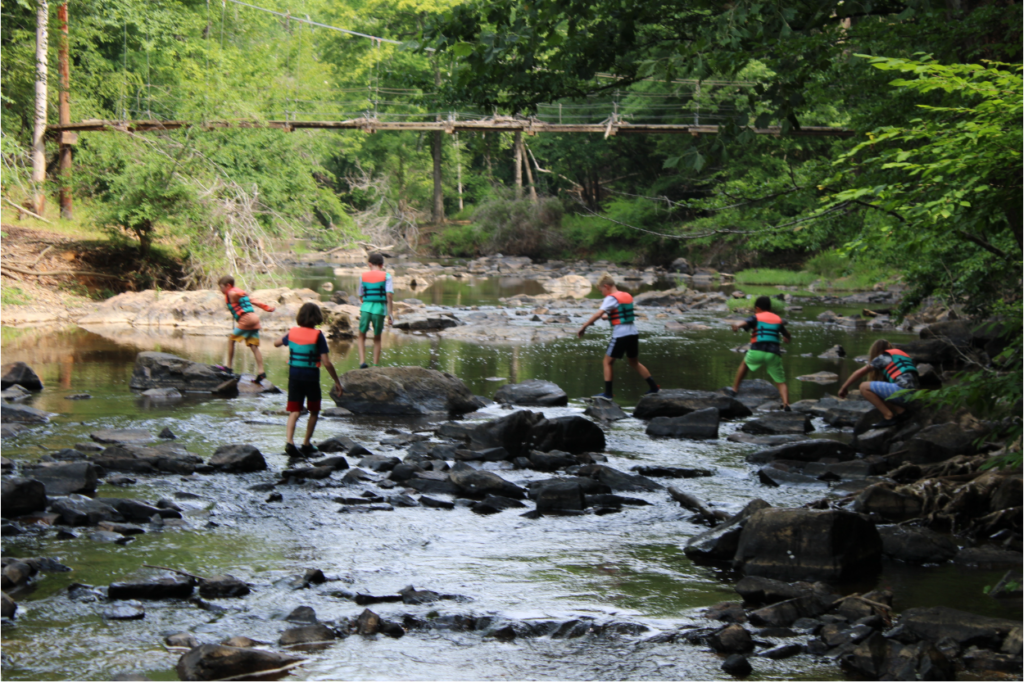
Through the new staff at the association, the ERA has taken some risks to step away from traditional parts of the Eno River Association’s work and pivoted a little bit to meet the needs of community, staff, and the Eno. However, these changes have not been without lots of consideration, and they are always trying to keep the conversation going while looking at the work holistically.
Audrey stated that “all of it [outreach and educational work] focuses around the idea of connecting people to the Eno… helping people to have fun along the Eno, but also learn about it… so we can lay the foundation for those kids to be good stewards of the land.” With public school programming, these children who are traditionally in the classroom are not going out to the Eno River and do not have a half-day to go visit the park. The idea has been to bring the river into the classroom and the hope is that the kids can visualize a path forward into environmental work.
Education is a really important piece of the puzzle, and helping people connect with the Eno and natural resources generally holds a lot of value. One recent addition to education and outreach includes the Eno Climate Champions, a multi-session program designed to engage local teens in hands-on climate learning, which is a bigger development for the education program and hopefully will be continuing into the future. Looking forward, education and outreach programs hope to see way more people, have solid partnerships with schools, and increase public programming.
Adapting to a Changing Climate
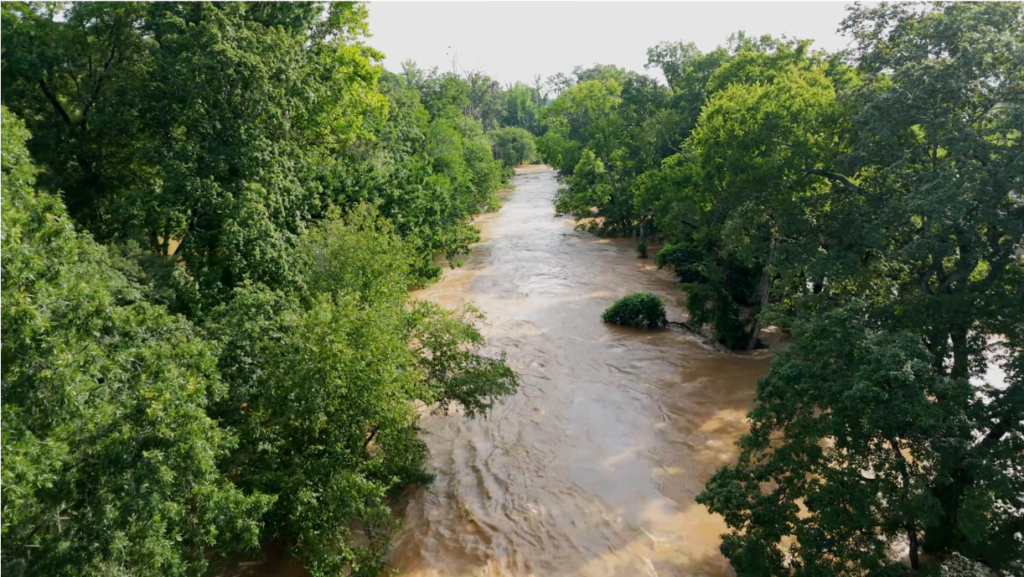
Throughout the 2020s, it is clear to see how education, conservation, stewardship, and outreach have grown at the ERA. It is also apparent that changing climates have forced a shift in the work that the ERA conducts. As the Executive Director Ryan Fehrman says, “One of the most important issues in our time is climate change and how we’re changing our actions.”
Especially looking at the ERA’s 60th anniversary event, the board was very concerned that over half of the 600 volunteers the ERA usually has are seniors, and they were relieved to get through the last year without any big issues. Then, Chantal hit. From here on, moving away from concerns of heat vulnerability is important in the work that the ERA conducts, which includes moving away from the status quo model for the festival, which is crucial to the longevity of the Eno River Association. Though it was not an easy decision to make, the ERA pivoted for its 60th anniversary, pushing the public celebration later in the year to September with a community gathering and benefit concert for the Eno.
In 2027, the ERA looks forward to partnering with Durham Parks and Recreation to return to the festival format on Earth Day weekend for a celebration where people can gather on the Eno to enjoy its natural beauty, appreciate its cultural history, and celebrate the richness of our community with less fears of heat stress and weather vulnerability.
Looking Ahead: The Next Chapter
In the future, the ERA will continue to adapt everyday actions to reflect the wishes of the community and address the needs of the Eno River Basin. The ERA hopes to increase conservation of the Eno River State Park, around the Confluence, and at Panther Branch to strengthen the connectivity for native plants and animals. Additionally, work to increase accessibility of various trails such as the recent projects to create Universal Access renovations in the Confluence are crucial. Finally, continuing restoration efforts such as the prairie restorations, invasive species removals, and forest re-plantings is extremely important to the natural resources that the Eno River Basin has to offer.
In education and outreach, the ERA will continue to reach people who may not have access to natural space and create a love for the outdoors and the community that the Eno River has to offer. With greater resources, we can organize more outreach with event and program management. The main mission of the Eno River Association has always been the protection and conservation of the natural, historical, and cultural resources of the Eno River Basin, and the ERA looks forward to adapting its work to best reflect this mission.