September Director’s Message
Dear Friends of the Eno,
During a year in which change and uncertainty have been the only true constants, it’s been impossible to ignore the gravity of guiding such a beloved organization through the landscape of transition. For almost half a century, the Festival for the Eno—well-steeped in riverside folk-and-local traditions—has shaped the life experiences, and certainly the July 4th plans, of countless central North Carolinians. If I have learned anything from the aftermath of last summer’s historic Eno River flooding, it’s that atmospheric elements are capable of delivering both cataclysmic destruction and hopeful resilience in the span of a single earth’s turn. Similarly, my tenure at the Eno River Association has impressed upon me the power of collective persistence driven by environmental justice and amplified by a community devoted to protecting an ancient, wandering watercourse.
I am not a scientist, nor a skilled wilderness adventurer, not even a novice naturalist. But I am, and have always been, in awe of the natural world. The Eno River has been a healer, a teacher, a hallowed geography offering evidence of what came before, and a peek at what is possible.For the last thirteen years, I have chosen to live on the edge of Orange County in the unincorporated community of Eno. As an artist, this landscape is a wellspring of inspiration, and the layered history keeps me curious. In fact, that curiosity is what first led me to ERA’s front door during the pandemic to pick up a book ordered from the online store.
At the time, I was working with Durham’s Merge Records on my third solo album, Every Acre, written largely about land ownership on the Eno. While researching land tracts and tracing maps of Fish Dam Road, I came across a journal called Ribbons of Color, No. 1: A History of Peoples of Color Living Along the Eno by Beverly Scarlett. The first year I worked on the Festival for the Eno event team, she gave a presentation on Ribbons of Color inside the Packhouse where Hugh Mangum photographs lined the tobacco barn walls. I remember being so moved by her storytelling, the painful recounting of her ancestors’ enslaved labor, and also the joy of fellowship at the Pleasant Green Fish Fry Station.
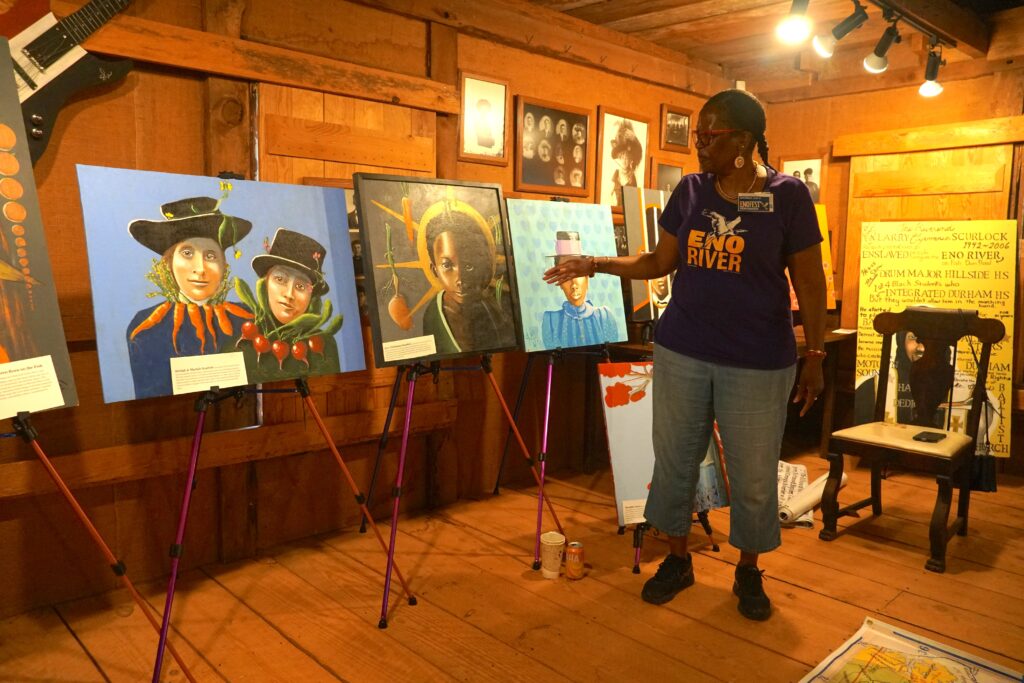
When I was first asked to step into the role of curating a one-off event celebrating ERA’s 60th Anniversary, the truth and perspective in Beverly’s narratives became my north star. I saw this event as an opportunity to deepen these dialogues about race, class, and uncomfortable history. Woven throughout the music program are two sound poetry collaborations: the first, “Grandmother Aeno” from Beverly Scarlett, centers the generational resilience of Eno’s BIPOC communities; the second is an excerpt from Nothing Abides, a mixed media piece written and performed by Dr. Cortland Gilliam and writer/experimental musician Brian Howe that brings the 18th century construction of UNC’s campus by Black builders to the forefront.
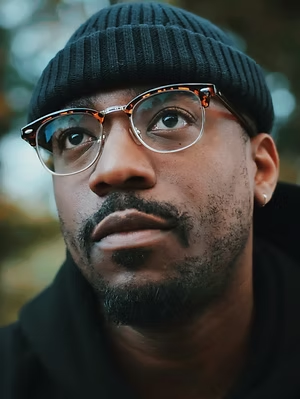
When programming the musical artists, I followed this thread of intention. I remembered when the Durham-based poet and activist, adrienne maree brown, posted on social media about a talented young local musician named Tre. Charles. I dug into his sound and quickly realized he was doing something sonically unique—atmospheric textures, expansive harmonies in dream-state stacks, mercurial flashes of jazz, all tethered to an unblushing center of soul.
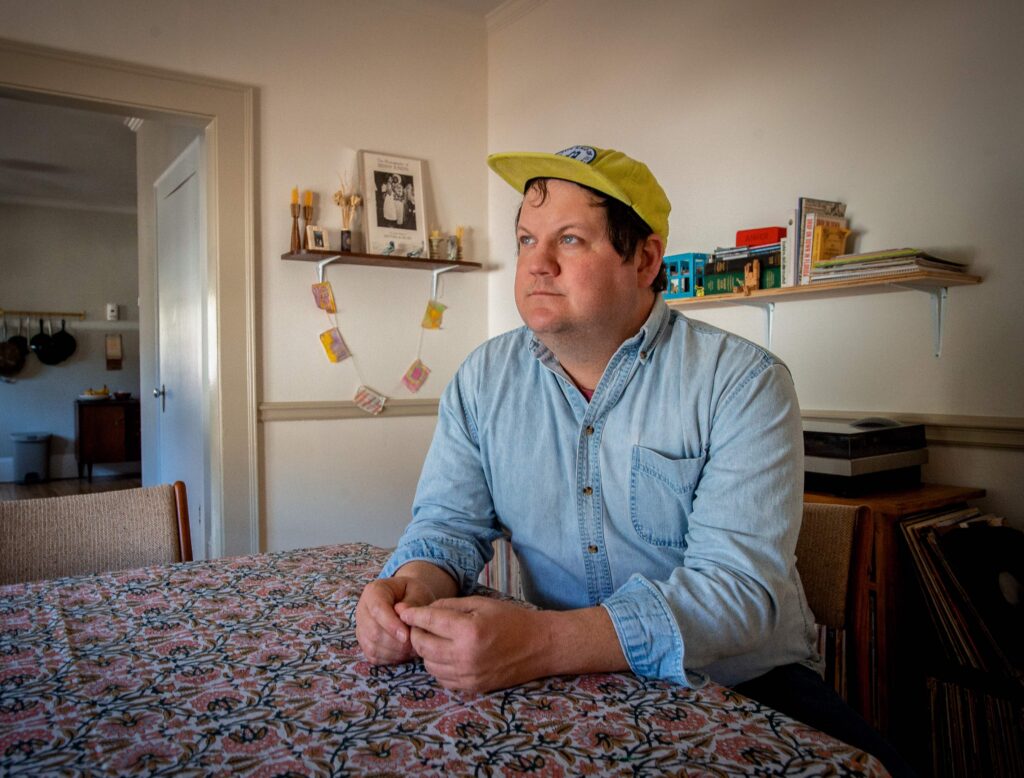
I first met Jake Xerxes Fussell about fifteen years ago while touring the country with my old band, Mount Moriah. I’ve gathered in the years since that what you see is what you get—a true-blue artist whose ultra-earnest approach to performing is rare and refreshing. His unabashed reverence for traditional folk and blues songs are presented in the way he thoughtfully honors and lifts them up in a new light for new ears. There is a joy that Jake plays and sings with in continuous dialogue with storytellers of bygone eras. It’s as if he is cuing up his favorite Americana ballad and dropping the needle—a humble student of blue-collar narratives and traditional form, yet poised to contribute his own style and interpretation to the timeless discourse.
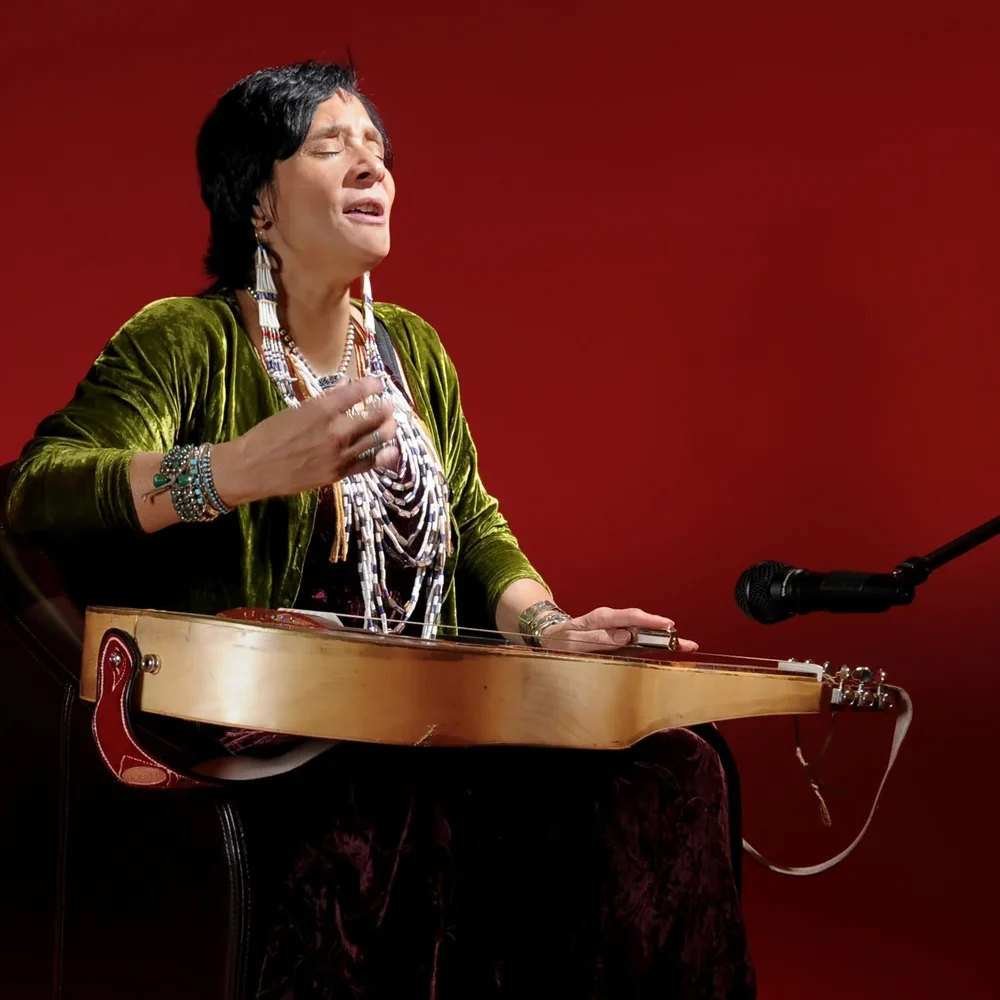
Sometimes the path to discovering artistic prowess requires tracing backwards to find your favorite artist’s favorite artist. I started with a couple folks I admire: Rhiannon Giddens named Pura Fé as a mentor during an interview and currently collaborates with her in the Silk Road Project; Eno artist and historian Joe Liles referenced the legendary a cappella hand drum trio, Ulali, of which she is a founding member, and urged me to check them out. Then I found my way to “Sacred Seed”, an album she released in 2015—and within an hour I had reached out with a long-shot offer to her manager (nearly certain that fate would likely not line up since she, after all, lives in rural Saskatchewan). To my surprise, she confirmed and enlisted her long-time collaborator and fingerstyle guitarist, Cary Morin, to join. I will let her power speak for itself through her performance on September 12th—as I have been told, the potency of her work lies in its witness.
May this concert inspire us to consider the Eno River landscape holistically—how, through the empowering language of music and the spotlight of visibility, the deep echoes of history might widen our lens of conservation, compassion and critical thinking.
Here’s to another 60 years, Eno River Association.
In solidarity,